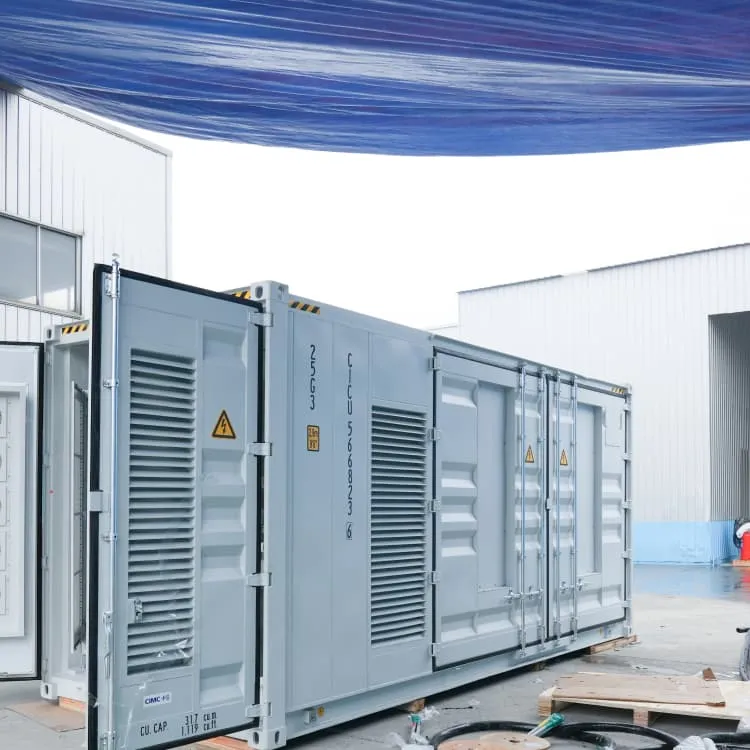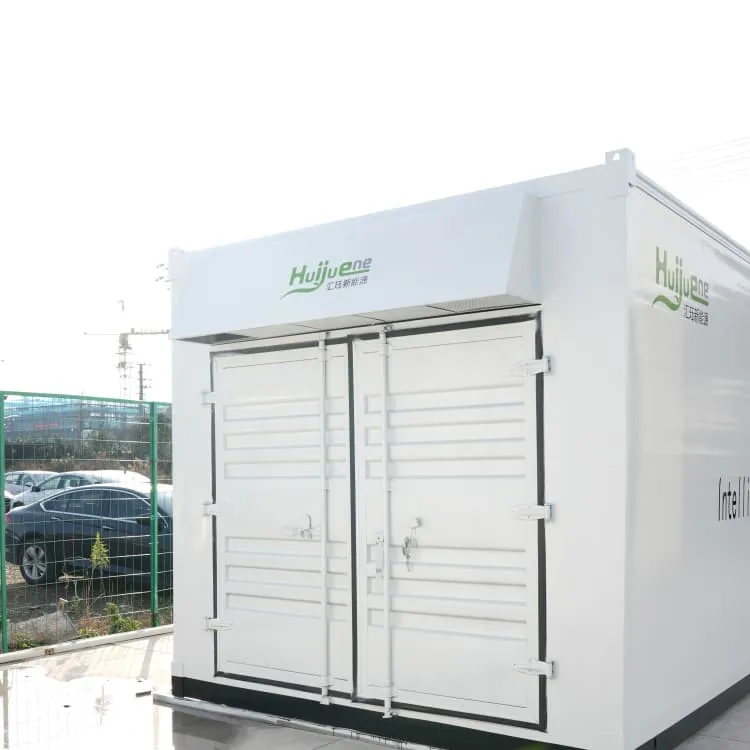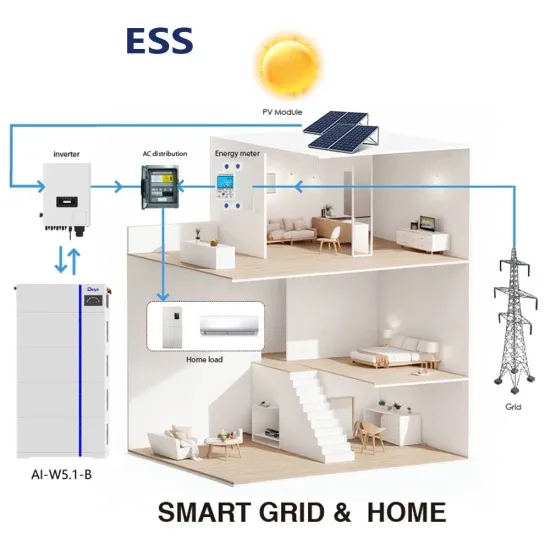
This page lists power stations in Ethiopia, both integrated with the national power grid but also isolated ones. Due to the quickly developing demand for electricity in Ethiopia, operational power plants are listed as well as those under construction and also proposed ones likely to be built within a number of years. OverviewDue to favorable conditions in Ethiopia (, , , ) for In. .
The lists provide all power plants within the Ethiopian national power grid (Ethiopian InterConnected System (ICS)). In addition, listed are all ICS power plants under construction, under rehabilitation or in stand-by-m. .
A complete list for all Ethiopian ICS power plants was published by the Ethiopian Electric Power (EEP) in September 2017. The average capacity factor of all the shown Ethiopian hydropower plants was at 0.46 in the. .
SCS power plants are dealt with within the Ethiopian regions or by private institutions and not the federal government anymore (last federal data were from 2015), which makes it somewhat challenging to list them. SCS powe. .
Ethiopia is now aiming as much as possible at geothermal energy, in contrast to the years before 2015, when the country focused almost exclusively on hydropower. Power plants with geothermal energy usually hav.
[PDF Version]

The global power supply market for base stations is experiencing robust growth, driven by the widespread deployment of 5G networks and the increasing demand for higher bandwidth and lower latency in telecommunications..
The global power supply market for base stations is experiencing robust growth, driven by the widespread deployment of 5G networks and the increasing demand for higher bandwidth and lower latency in telecommunications..
The global power supply market for base stations is experiencing robust growth, driven by the widespread deployment of 5G networks and the increasing demand for higher bandwidth and lower latency in telecommunications. The market, valued at approximately $10.2 billion in 2025, is projected to grow. .
Solar and wind are now expanding fast enough to meet all new electricity demand, a milestone reached in the first three quarters of 2025. Ember’s analysis published in November shows that these technologies are no longer just catching up; they are outpacing demand growth itself. Together, solar and. .
Record renewable deployment and the impact of AI were key trends in the energy landscape in 2025. Energy continued to be a key topic in 2025 - on the global news agenda and for the World Economic Forum. From energy transition momentum to increased focus on critical minerals, here are some of the.
[PDF Version]

Therefore, this paper investigates changes in the instantaneous power consumption of GSM (Global System for Mobile Communications) and UMTS (Universal Mobile Telecommunications System) base stations according to their respective traffic load..
Therefore, this paper investigates changes in the instantaneous power consumption of GSM (Global System for Mobile Communications) and UMTS (Universal Mobile Telecommunications System) base stations according to their respective traffic load..
Energy efficiency of any deployment is impacted by the power consumption of each individual network element and the dependency of transmit power and load. In this paper we developed such power models for macro and micro base stations relying on data sheets of several GSM and UMTS base stations with. .
Since traffic load in mobile networks significantly varies during a working or weekend day, it is important to quantify the influence of these variations on the base station power consumption. Therefore, this paper investigates changes in the instantaneous power consumption of GSM (Global System.
[PDF Version]
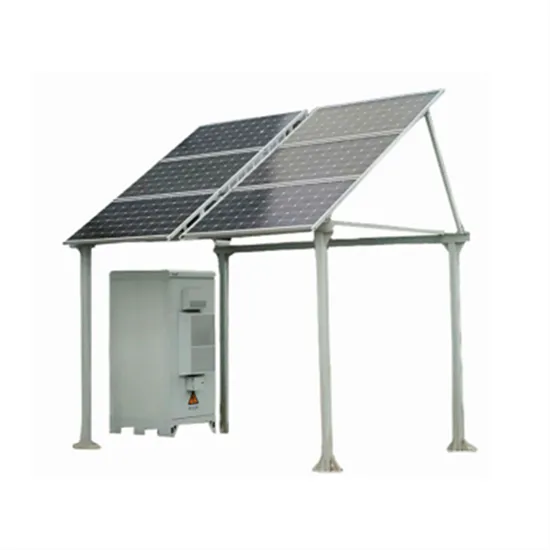
The Fekola Hybrid Power Station (French Centrale électrique hybride de Fekola) is a 115 MW (154,000 hp) power plant in Mali. The power system comprises 68 MW of thermal energy, 30 MW of solar power and 17.3 MW of lithium ion battery energy storage. The power station is owned by B2Gold Corporation, a Canadian mining company. Dornier Suntrace GmbH (also Suntr. CountryLocationFadougou, , Official nameCentrale électrique hybride de FekolaStatusOperationalLocationThe power station is located in the settlement of Fadougou, in , in the in southwestern Mali, near the border with . Fekola Gold Mine is located approximately 61 kilometres (38 mi), so. .
Before 2019, the Fekola gold mine had a legacy thermal power station with capacity of 68 megawatts. The thermal station has six units, with each unit capable of generating 11.33 MW at maximum output. These unit. .
The addition of the solar farm and the battery storage system allows the power station to rest three of the six thermal generators during the day. This allows the electricity demand of the gold mine during daytime to.
[PDF Version]
A power station, also referred to as a power plant and sometimes generating station or generating plant, is an industrial facility for the of . Power stations are generally connected to an . Many power stations contain one or more , rotating machines that converts mechanical power into . The relative motio.
[PDF Version]
The Log9 company is working to introduce its tropicalized-ion battery (TiB) backed by lithium ferro-phosphate (LFP) and lithium-titanium-oxide (LTO) battery chemistries. Unlike LFP and LTO, the more popular NMC (Nickel Manganese Cobalt) chemistry does have the requisite temperature resilience to survive in the warmest conditions such as in India. LTO is not only temperature resilient, but also has a long life.
[PDF Version]