A typical system consists of a flywheel supported by connected to a . The flywheel and sometimes motor–generator may be enclosed in a to reduce friction and energy loss. First-generation flywheel energy-storage systems use a large flywheel rotating on mechanical bearings. Newer systems use composite
[PDF Version]
Success of cadmium telluride PV has been due to the low cost achievable with the CdTe technology, made possible by combining adequate efficiency with lower module area costs. Direct manufacturing cost for CdTe PV modules reached $0.57 per watt in 2013, and capital cost per new watt of capacity was about $0.9 per watt (including land and buildings) in 2008.
[PDF Version]
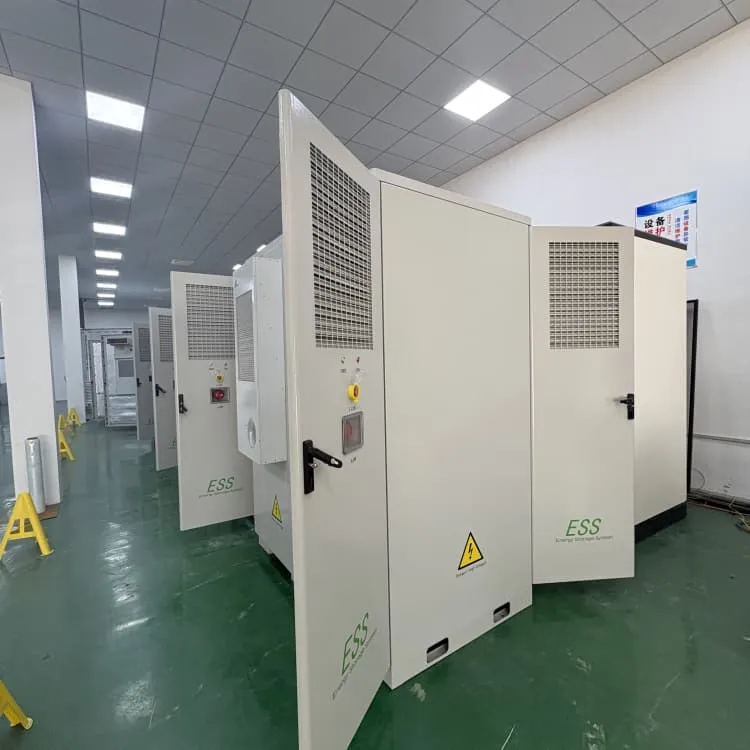
This paper presents a comprehensive review of the fundamental principles, materials, systems, and applications of electrochemical energy storage, including batteries, super capacitors, and fuel cells..
This paper presents a comprehensive review of the fundamental principles, materials, systems, and applications of electrochemical energy storage, including batteries, super capacitors, and fuel cells..
electrochemical energy storage system is shown in Figure1. charge Q is stored. So the system converts the electric energy into the stored chemical energy in charging process. through the external circuit. The system converts the stored chemical energy into electric energy in discharging process..
The rapid transition toward renewable energy and electric mobility has elevated the importance of electrochemical energy storage technologies. This paper presents a comprehensive review of the fundamental principles, materials, systems, and applications of electrochemical energy storage, including. .
The world is on the cusp of a renewable energy revolution, and electrochemical energy storage is at the forefront of this transformation. As we transition towards a more sustainable energy landscape, the demand for efficient, reliable, and cost-effective energy storage solutions has never been more.
[PDF Version]
Success of cadmium telluride PV has been due to the low cost achievable with the CdTe technology, made possible by combining adequate efficiency with lower module area costs. Direct manufacturing cost for CdTe PV modules reached $0.57 per watt in 2013, and capital cost per new watt of capacity was about $0.9 per watt (including land and buildings) in 2008.
[PDF Version]
What is the cadmium telluride PV perspective paper?
SETO released the Cadmium Telluride PV Perspective Paper in January 2025, outlining the state of CdTe PV technology and SETO’s priorities to reduce costs, address materials availability, and support the scale-up of CdTe within the domestic utility-scale PV market. A large-scale solar array in Colorado with CdTe modules.
Are polyimide solar cells better than glass?
The solar cells achieved an efficiency of 11 %. However, polyimide (PI) is less thermally stable compared to glass and may exhibit thermal expansion, which can cause delamination and degradation of the device. PI is also more susceptible to moisture and oxygen, which can degrade the effectiveness of the flexible CdTe solar cells . Fig. 4.
Which glass substrate is used in the production of CdTe solar cells?
Rigid glass substrates, such as soda-lime glass (SLG) [, , ] or borosilicate glass , have been traditionally applied in the production process of CdTe solar cells and are widely used among researchers.
Are CdTe solar panels durable?
The exploration of CdTe solar panels was further continued in 2010 when Korea University introduced a new type of flexible substrate that was made from a polymer called polyethylene naphthalate (PEN) . PEN was identified to be durable with acceptable thermal stability as compared to the other flexible substrates.

Solar Roadways Incorporated is an American company based in Sandpoint, Idaho, aiming to develop solar-powered road panels to form a smart highway. Their proof-of-concept technology is a hexagonal road panel that has a glass driving surface with underlying solar cells, electronics, and sensors to act as a part of solar array with programmable capability. The concept has been widely. HistoryThe company was founded in 2006 by Scott and Julie Brusaw, with Scott as President and . They envisioned. .
In 2014, Jonathan Levine, a professor of at the , expressed doubt regarding the political feasibility of the project on a national scale. He suggested, however, that a single town might be a. .
• 2010 Ecomagination Community Award of $50,000. • 2014 . One of 7 "Best of What's New" Engineering category in the "100 Greatest Innovations of the Year-2014" article.. .
• • • • •.
[PDF Version]
This study involved the creation of self-cleaning surfaces on glass substrates by applying a polyvinylidene fluoride (PVDF) solution through spray coating. The properties of the coated surfaces were evaluate.
[PDF Version]