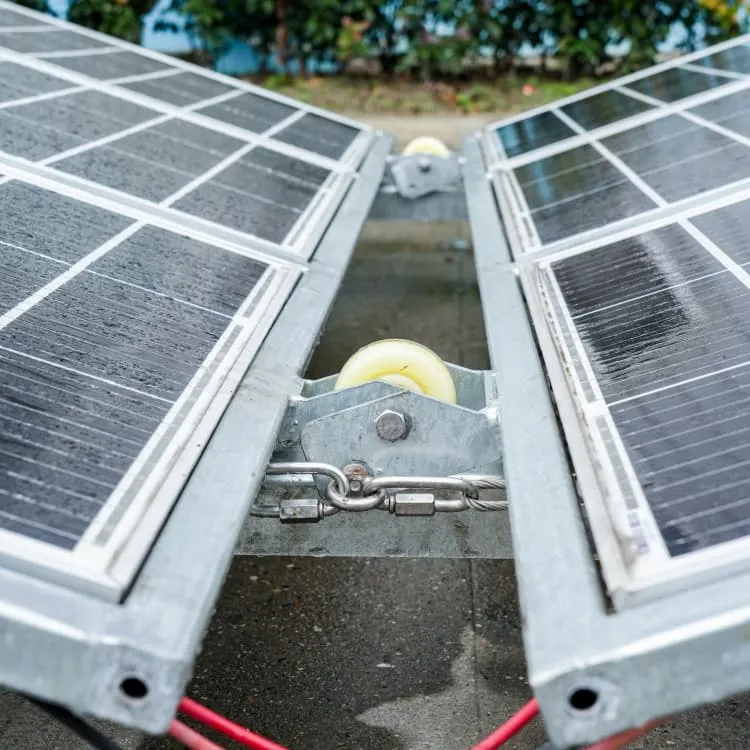
In 2024, faced an infrastructure crisis unprecedented in its national history as a result of sustained and , in addition to disconnection from the Russian and Belarusian energy grid. The situation created significant challenges during the 2024 winter season, with the country's generating capa.
[PDF Version]
The complementary development of wind and photovoltaic energy can enhance the integration of variable renewables into the future energy structure. It can be employed as a unified solution to address the discrepancy between the supply and demand of power within the power system. .
The complementary development of wind and photovoltaic energy can enhance the integration of variable renewables into the future energy structure. It can be employed as a unified solution to address the discrepancy between the supply and demand of power within the power system. .
That said,the complementary use of wind and solar resources combined,also known as hybrid systems,is attractive. Hybrid systems are complementaryeven complementary,called imperfect complementarity . Does solar and wind energy complementarity reduce energy storage requirements? This study provided. .
China is advancing a nearly 1.3 terawatt (TW) pipeline of utility-scale solar and wind capacity, leading the global effort in renewable energy buildout. This is in addition to China’s already operating 1.4 TW of solar and wind capacity, nearly 26% of which (357 gigawatts (GW)) came online in 2024..
The complementary development of wind and photovoltaic energy can enhance the integration of variable renewables into the future energy structure. It can be employed as a unified solution to address the discrepancy between the supply and demand of power within the power system . Which regions.
[PDF Version]
Are wind and solar energy resources complementary in China?
The results reveal that wind energy and solar energy resources in China undergo large interannual fluctuations and show significant spatial heterogeneity. At the same time, according to the complementarity of wind and solar resources, over half of China’s regions are suitable for the complementary development of resources.
Can wind and solar power be used in China's northwestern provinces?
In the quest to scientifically develop power systems increasingly reliant on renewable energy sources, the potential and temporal complementarity of wind and solar power in China’s northwestern provinces necessitated a systematic assessment.
Is there a correlation between wind and solar energy in China?
By calculating the Kendall rank correlation coefficient between wind and solar energy in China, the study mapped the spatial distribution of wind-solar energy complementarity. Han et al. proposed a complementary evaluation framework for wind-solar-hydro multi-energy systems based on multi-criteria assessment and K-means clustering algorithms.
Are solar and wind resources complementary?
Complementarity of Solar and Wind Resources the development and use of different types of renewable energy. T oward this end, we in a complementary way on an interannual time scale. To test this method, we use the resources on the interannual time scale.
In one simple inverter circuit, DC power is connected to a through the center tap of the primary winding. A switch is rapidly switched back and forth to allow current to flow back to the DC source following two alternate paths through one end of the primary and then the other. The alternation of the direction of current in the primary winding of the transformer produces
[PDF Version]
This low-temperature capacity degradation directly reduces EV driving range, limits energy storage availability, and affects system reliability in cold climates. Cold temperatures significantly increase battery internal resistance, leading to reduced discharge power. .
This low-temperature capacity degradation directly reduces EV driving range, limits energy storage availability, and affects system reliability in cold climates. Cold temperatures significantly increase battery internal resistance, leading to reduced discharge power. .
Among various options, lithium-ion batteries (LIBs) stand out as a key solution for energy storage in electrical devices and transportation systems. However, their performance at sub-zero temperatures presents significant challenges, restricting their broader use. This review first outlines the. .
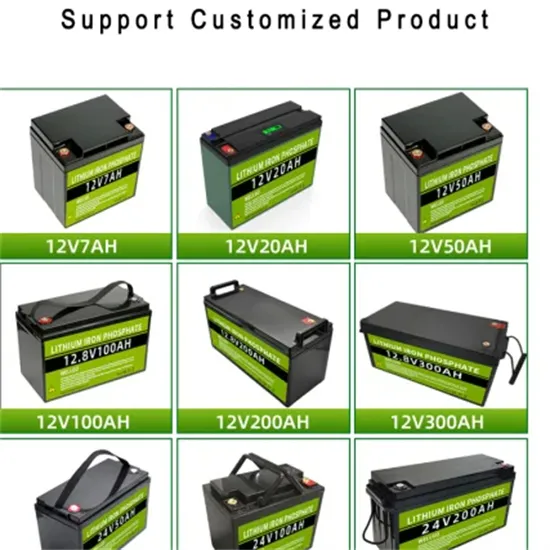
Low-temperature batteries are specialized power sources, often lithium-based (LiFePO₄, LTO), engineered with unique materials and designs to maintain high discharge capacity and even charge in freezing conditions where standard batteries fail. They use special electrolytes, internal heating, or. .
The operational performance of lithium-ion batteries (LIBs) experiences major deterioration when they operate at temperatures below freezing point. The work examines preheating methods for LIBs through a focus on phase change materials (PCMs) and nano-enhanced PCMs (NEPCMs). The paper evaluates.
[PDF Version]
The AC output voltage of a power inverter is often regulated to be the same as the grid line voltage, typically 120 or 240 VAC at the distribution level, even when there are changes in the load that the inverter is driving.OverviewA power inverter, inverter, or invertor is a device or circuitry that changes (DC) to (AC). The resulting AC frequency obtained depends on the particular device employed. I. .
A typical power inverter device or circuit requires a stable DC power source capable of supplying enough current for the intended power demands of the system. The input voltage depends on the design and purpos. .
The runtime of an inverter powered by batteries is dependent on the battery power and the amount of power being drawn from the inverter at a given time. As the amount of equipment using the inverter increases, the runtim.
[PDF Version]