
Stay informed about the latest developments in solar-storage container technology, photovoltaic storage systems, containerized PV solutions, and renewable energy innovations.
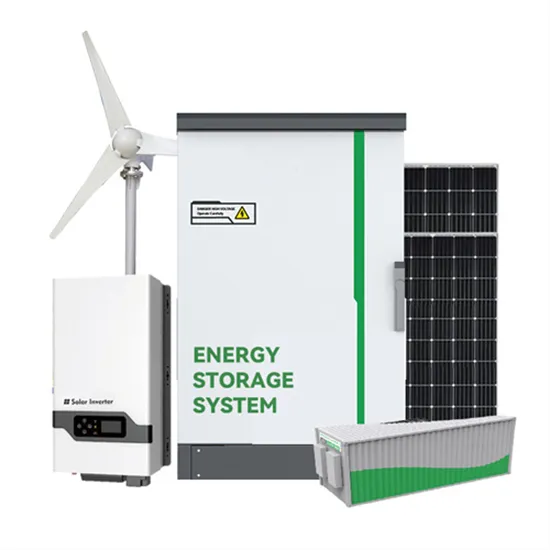
The operation of the electricity network has grown more complex due to the increased adoption of renewable energy resources, such as wind and solar power. Using energy storage technology can improve the stability and quality of the power grid. One such technology is flywheel energy storage systems (FESSs).
Flywheel energy storage is mostly used in hybrid systems that complement solar and wind energy by enhancing their stability and balancing the grid frequency because of their quicker response times or with high-energy density storage solutions like Li-ion batteries .
Fly wheels store energy in mechanical rotational energy to be then converted into the required power form when required. Energy storage is a vital component of any power system, as the stored energy can be used to offset inconsistencies in the power delivery system.
Traditional flywheel systems require strong containment vessels as a safety precaution, which increases the total mass of the device. The energy release from failure can be dampened with a gelatinous or encapsulated liquid inner housing lining, which will boil and absorb the energy of destruction.
The results reveal that wind energy and solar energy resources in China undergo large interannual fluctuations and show significant spatial heterogeneity. At the same time, according to the complementarity of wind and solar resources, over half of China’s regions are suitable for the complementary development of resources.
In the quest to scientifically develop power systems increasingly reliant on renewable energy sources, the potential and temporal complementarity of wind and solar power in China’s northwestern provinces necessitated a systematic assessment.
By calculating the Kendall rank correlation coefficient between wind and solar energy in China, the study mapped the spatial distribution of wind-solar energy complementarity. Han et al. proposed a complementary evaluation framework for wind-solar-hydro multi-energy systems based on multi-criteria assessment and K-means clustering algorithms.
Complementarity of Solar and Wind Resources the development and use of different types of renewable energy. T oward this end, we in a complementary way on an interannual time scale. To test this method, we use the resources on the interannual time scale.


SETO released the Cadmium Telluride PV Perspective Paper in January 2025, outlining the state of CdTe PV technology and SETO’s priorities to reduce costs, address materials availability, and support the scale-up of CdTe within the domestic utility-scale PV market. A large-scale solar array in Colorado with CdTe modules.
The solar cells achieved an efficiency of 11 %. However, polyimide (PI) is less thermally stable compared to glass and may exhibit thermal expansion, which can cause delamination and degradation of the device. PI is also more susceptible to moisture and oxygen, which can degrade the effectiveness of the flexible CdTe solar cells . Fig. 4.
Rigid glass substrates, such as soda-lime glass (SLG) [, , ] or borosilicate glass , have been traditionally applied in the production process of CdTe solar cells and are widely used among researchers.
The exploration of CdTe solar panels was further continued in 2010 when Korea University introduced a new type of flexible substrate that was made from a polymer called polyethylene naphthalate (PEN) . PEN was identified to be durable with acceptable thermal stability as compared to the other flexible substrates.










