Success of cadmium telluride PV has been due to the low cost achievable with the CdTe technology, made possible by combining adequate efficiency with lower module area costs. Direct manufacturing cost for CdTe PV modules reached $0.57 per watt in 2013, and capital cost per new watt of capacity was about $0.9 per watt (including land and buildings) in 2008.
[PDF Version]
This study involved the creation of self-cleaning surfaces on glass substrates by applying a polyvinylidene fluoride (PVDF) solution through spray coating. The properties of the coated surfaces were evaluate.
[PDF Version]
Solar control performance is achieved through the use of a very thin, transparent, and permanent coating that helps limit the solar energy entering inside. It helps control solar gain to various level.
[PDF Version]
Success of cadmium telluride PV has been due to the low cost achievable with the CdTe technology, made possible by combining adequate efficiency with lower module area costs. Direct manufacturing cost for CdTe PV modules reached $0.57 per watt in 2013, and capital cost per new watt of capacity was about $0.9 per watt (including land and buildings) in 2008.
[PDF Version]
What is the cadmium telluride PV perspective paper?
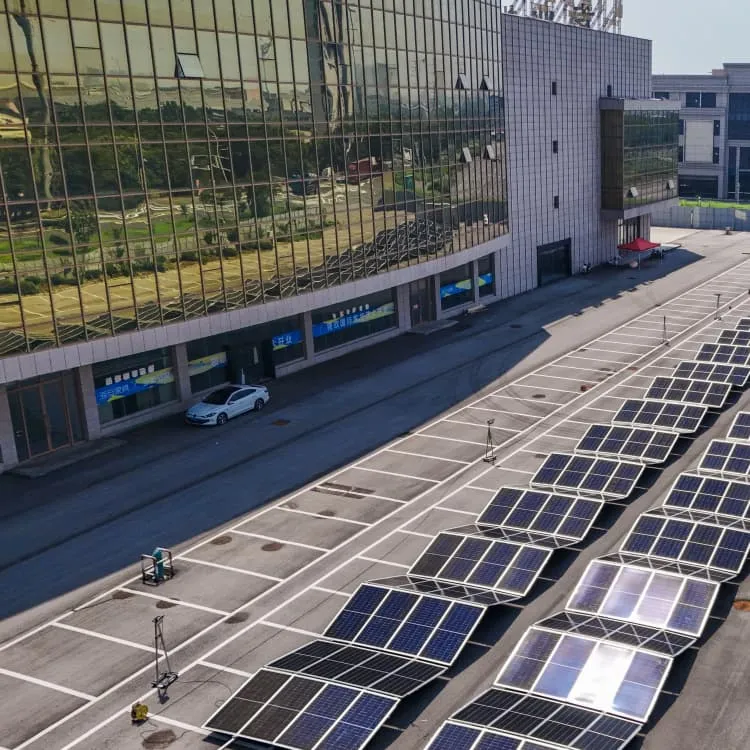
SETO released the Cadmium Telluride PV Perspective Paper in January 2025, outlining the state of CdTe PV technology and SETO’s priorities to reduce costs, address materials availability, and support the scale-up of CdTe within the domestic utility-scale PV market. A large-scale solar array in Colorado with CdTe modules.
Are polyimide solar cells better than glass?
The solar cells achieved an efficiency of 11 %. However, polyimide (PI) is less thermally stable compared to glass and may exhibit thermal expansion, which can cause delamination and degradation of the device. PI is also more susceptible to moisture and oxygen, which can degrade the effectiveness of the flexible CdTe solar cells . Fig. 4.
Which glass substrate is used in the production of CdTe solar cells?
Rigid glass substrates, such as soda-lime glass (SLG) [, , ] or borosilicate glass , have been traditionally applied in the production process of CdTe solar cells and are widely used among researchers.
Are CdTe solar panels durable?
The exploration of CdTe solar panels was further continued in 2010 when Korea University introduced a new type of flexible substrate that was made from a polymer called polyethylene naphthalate (PEN) . PEN was identified to be durable with acceptable thermal stability as compared to the other flexible substrates.
First Solar, Inc. is a American manufacturer of It provides panel recycling at each of its manufacturing facilities. First Solar uses rigid for its solar panels, and produces using (CdTe) as a semiconductor. The company was founded in 1990 by inventor as Solar Cells, Inc. In 1999 it was purcha.
[PDF Version]
Who makes first solar panels?
First Solar, Inc. is a publicly traded American manufacturer of solar panels. It provides end-of-life panel recycling at each of its manufacturing facilities. First Solar uses rigid thin-film modules for its solar panels, and produces CdTe panels using cadmium telluride (CdTe) as a semiconductor.
What will First Solar do in Meadville?
Once the facility is commissioned, its workers will join thousands of American solar workers in enabling our country’s energy transition.” Vitro’s investment in the Meadville Plant is expected to provide First Solar with a vital domestic source of float glass, which is a significant component of the company’s advanced thin film solar panels.
Does first solar use cadmium telluride?
First Solar uses rigid thin-film modules for its solar panels, and produces CdTe panels using cadmium telluride (CdTe) as a semiconductor. The company was founded in 1990 by inventor Harold McMaster as Solar Cells, Inc. In 1999 it was purchased by True North Partners, LLC, which rebranded it as First Solar, Inc.
Who is first solar?
Contact: First Solar is a leading American solar technology company and global provider of responsibly produced eco-efficient solar modules advancing the fight against climate change.

The average cost of solar panels ranges from $2.50 to $3.50 per watt installed, with most homeowners paying between $15,000 and $35,000 for a complete system before incentives. After applying the 30% federal tax credit, net costs typically range from $10,500 to $24,500..
The average cost of solar panels ranges from $2.50 to $3.50 per watt installed, with most homeowners paying between $15,000 and $35,000 for a complete system before incentives. After applying the 30% federal tax credit, net costs typically range from $10,500 to $24,500..
If you own a 2,000-square-foot house, expect to pay around $29,000 for a complete solar system before tax credits, or about $20,300 after taking the federal tax credit. How big your home is and how much electricity you use are the main things affecting your cost. A small 1,000-square-foot condo. .
Historic Low Pricing: Solar costs have reached unprecedented lows in 2025, with systems ranging from $2.50-$3.50 per watt installed, making the technology more accessible than ever before. Federal Tax Credit Urgency: With Congress proposing to end the 30% federal tax credit after 2025, homeowners. .
Solar panels cost $3.00 to $4.50 per watt installed on average, with homeowners spending about $3.75 per watt before factoring in available solar incentives. A 6- to 10-kW solar panel installation costs $12,600 to $31,500 after the 30% federal tax credit. Solar panel prices depend on the size.
[PDF Version]